


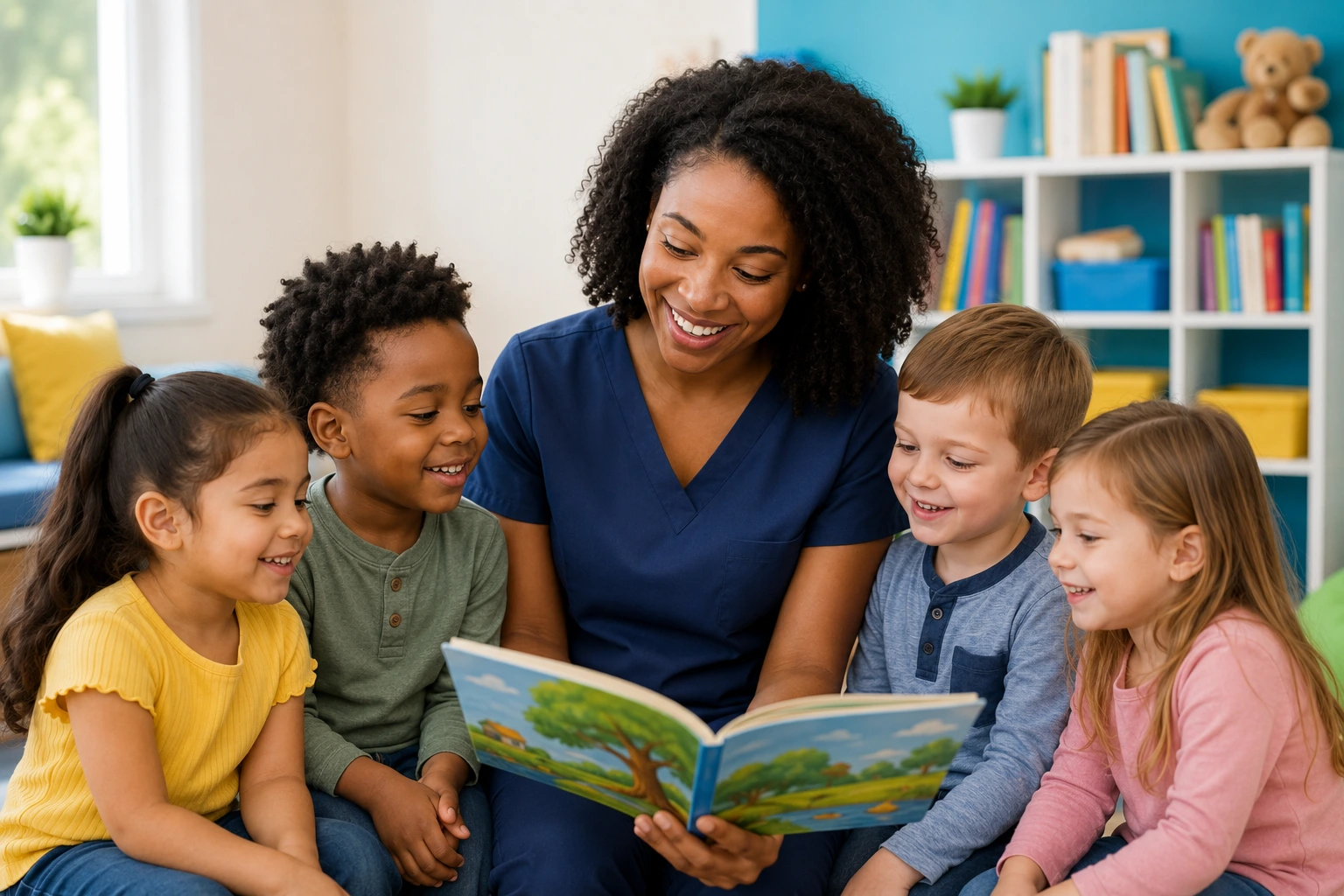
Children learn good habits through small daily moments, repeated practice, and patient encouragement. Simple habits like washing hands, cleaning up, using kind words, waiting for a turn, and following routines take time to build.
Good habits do not usually happen after one reminder. Young children need adults to show them what to do, practice with them, and notice their effort along the way.
At Nanda Learning Center, we understand that parents want children to grow more confident, helpful, and independent without feeling pressured. Early habits work best when they feel like part of the day, not like a strict lesson.
When you compare care options, daily routines, teacher guidance, and age-appropriate expectations are all worth considering when choosing the right daycare for your child.
Good Habits Start With Small Daily Moments
Young children often learn habits during ordinary parts of the day. They may practice washing hands before eating, putting toys away after play, waiting for a turn, or using gentle hands with a friend.
These moments may seem small, but they help your child learn how to care for themselves, respect shared spaces, and participate in daily routines.
Helpful early habits may include:
- Washing hands before meals
- Cleaning up toys after play
- Saying “please” and “thank you”
- Waiting for a turn
- Listening during a short activity
- Helping with simple tasks
- Using gentle hands
- Trying again after a mistake
Your child does not need to master these habits right away. The early years are for practice. A toddler may need many reminders to clean up. A preschooler may still forget to wait. An older infant may begin learning through simple cues, repetition, and adult modeling.
Progress often starts with one small step repeated many times.
Model the Habit Before Expecting It
Children learn a lot by watching adults. Before your child can practice a habit on their own, they often need to see what it looks like.
You can model habits by doing them with your child:
- Wash hands together before eating
- Put toys in a basket while naming the action
- Use calm words when something is frustrating
- Say “my turn” and “your turn” during play
- Show how to use gentle hands
- Thank your child when they help
Simple language helps. Instead of giving a long explanation, use short phrases your child can remember.
For example:
- “Hands first, then snack.”
- “Toys in the basket.”
- “Gentle hands.”
- “We wait for a turn.”
- “Let’s try again.”
When adults model the habit calmly, children have a clearer example to follow. They may not copy it every time, but repetition gives them more chances to understand.
Use Repetition Without Pressure
Good habits grow through repetition. Children need to hear the same words, follow the same steps, and practice the same actions many times before those habits begin to feel familiar.
When the same helpful steps happen each day, children begin to know what comes next. That is one reason daily routines help children feel secure as they build new habits.
Repetition works best when it feels calm. If every reminder becomes a correction, children may feel frustrated or discouraged. A steady reminder can be enough.
For example, instead of saying, “You forgot again,” you might say:
- “Let’s wash hands before we eat.”
- “The blocks go back on the shelf.”
- “We use walking feet inside.”
- “You can try again.”
- “I’ll help you start.”
Young children often need support before they can act independently. You can guide the first step, then let your child try the next one.
Encourage Helpful Habits by Age
Good habits should match your child’s age and stage. What works for a toddler may not fit an older infant, and what works for a preschooler may be too much for a younger child.
At Nanda Learning Center, our childcare and preschool education supports habits through everyday routines, guided activities, and patient reminders. For infants, toddlers, and preschoolers, those habits may look different depending on their age, communication, and independence.
For older infants, early habits may begin with:
- Handwashing support
- Mealtime routines
- Simple cleanup with help
- Gentle cues during play
- Responding to familiar words or actions
For toddlers, habits may include:
- Putting toys away
- Practicing simple choices
- Sharing space with others
- Using words or gestures to ask for help
- Washing hands with reminders
- Learning to wait for short periods
For preschoolers, habits may include:
- Helping with classroom materials
- Listening during group activities
- Taking turns
- Caring for belongings
- Using kind words
- Following multi-step routines with support
Age-appropriate expectations matter. Children are more likely to practice helpful habits when the steps are clear and realistic.
Encourage Effort Without Expecting Perfection
Praise can help children notice what they are learning, especially when it names the effort or action.
Instead of only saying “good job,” try pointing out the habit:
- “You put the blocks away.”
- “You waited for your turn.”
- “You used gentle hands.”
- “You tried again.”
- “You helped clean up.”
- “You asked for help with words.”
Specific praise helps your child understand what they did well. It also encourages them to repeat the habit later.
Children will still forget. They may test limits, move too quickly, or need the same reminder many times. That is part of learning.
Calm correction is more helpful than shame. If your child grabs a toy, you can say, “We wait for a turn. Let’s give it back and try again.” If your child forgets to clean up, you can start with them and say, “I’ll help with the first toy.”
Good habits take patience. The aim is steady practice, not perfect behavior.
How Childcare Routines Can Support Good Habits
Childcare gives children repeated chances to practice helpful habits in a group environment. Daily routines can support habits because children see the same steps again and again.
A classroom routine may give children chances to:
- Put materials away after an activity
- Wash hands before meals
- Sit for snack or lunch
- Listen during story time
- Wait for a turn
- Help with simple cleanup
- Use kind words with classmates
- Move from one activity to another
Children may also learn by watching other children. When they see classmates cleaning up, waiting, singing, listening, or helping, they begin to understand that these habits are part of the day.
Caregivers can support habits with simple reminders, clear expectations, and patient repetition. Over time, familiar routines can help children participate with more confidence.
Simple Good Habits Parents Can Practice at Home
You do not need a complicated plan to teach good habits at home. A few repeated steps can make a difference.
You can try:
- Washing hands before meals
- Cleaning up one activity before starting another
- Reading or singing at the same time each day
- Letting your child help with small tasks
- Practicing short waits during play
- Using the same goodbye or bedtime phrase
- Naming kind actions when you see them
- Giving simple choices, such as “blocks or books?”
Keep the habit small at first. If cleanup feels hard, start with one basket. If waiting feels hard, start with a few seconds. If handwashing feels rushed, turn it into a short routine with the same words each time.
Your child may respond better when the habit feels predictable. A calm routine helps them understand what to do next.
FAQ
What are good habits to teach children early?
Helpful early habits include washing hands, cleaning up toys, using kind words, waiting for a turn, sharing space, listening during short activities, helping with simple tasks, and following daily routines.
How do toddlers learn good habits?
Toddlers learn through modeling, repetition, simple language, encouragement, and patient reminders. They often need adults to show the habit many times before they can practice it more independently.
How can preschoolers practice responsibility?
Preschoolers can practice responsibility through small tasks like cleaning up materials, caring for belongings, helping with simple classroom routines, waiting for turns, and using respectful words with others.
Final Thoughts
Good habits grow through daily practice. When children see helpful actions modeled, repeat familiar steps, and receive encouragement, they can begin to build routines that support independence, kindness, and confidence.
At Nanda Learning Center, we welcome questions about how daily routines, guided activities, and age-appropriate care can support helpful habits as children grow.
If you want to understand how daily routines and age-appropriate activities can support your child’s habits, you can contact us to ask what care may look like for infants, toddlers, and preschoolers.


Leave a Reply